Posts in Linked

Third-Party Vendors Fill the Void Caused by Overwhelmed Apple Geniuses

Molly McHugh writing for The Ringer:

The saturation of iOS and Mac products means more and more people own Apple devices—which means more and more people need help using them. Each iOS and MacOS release reveals a new suite of tools and capabilities, but also new challenges and complications (and sometimes bugs). At the same time, Apple’s Genius Bar has become a purgatory no iDevice owner wants to find themselves stuck in.

That in a nutshell is one of the greatest challenges facing Apple retail today, and one that’s been years in the making. It’s not really surprising either. Especially since the introduction of the iPhone, the number of Apple devices in consumers’ hands has grown exponentially, while the number of Apple Stores and Geniuses that work in them has not.

McHugh ultimately resorted to a third-party repair shop to solve a software problem with Voice Memos and had a good experience. The story, however, strikes an increasingly common refrain that highlights a problem Apple needs to address.

Permalink

How Apple Music Could Own the Classical Music Audience

Mitchel Broussard of MacRumors recently published an in-depth look at the problems classical music fans have with Apple Music’s approach to that expansive genre. Unlike many other common genres, such as hip-hop, pop, and country, the range of music deemed ‘classical’ bears its own unique challenges in a variety of areas. Broussard spoke to Benjamin Charles and Franz Rumiz, classical music enthusiasts, who shared their frustrations with how Apple Music fails to optimize for classical music’s distinctness. He writes:

[Apple Music’s Classical] section spans centuries, including all of the notable composers like Mozart (born 1756, died 1791), Maurice Ravel (b. 1875, d. 1937), and John Cage (b. 1912, d. 1992), but this grouping is frustrating for classical music aficionados, given how little these musicians have in common among one another…Rumiz: “The sorting of recordings follows the rules of pop & rock genre. For classical music this doesn’t fit at all, because you very often want to compare different recordings of the same pieces by the same composer with different soloists, orchestras and conductors.”
[…]
Charles says that one aspect of classical music that’s mixed up in the shuffle is the listener’s interest in a piece’s composer versus its performer. While some artists, like Leonard Bernstein, both compose and perform their music, Charles questions how Apple Music determines the best recording for a piece of music: “Is a recording more significant because it is composed by Bach, or is it more significant because it is performed by Glenn Gould?”

Classical music also can be extremely difficult to request of Siri due to the unique names for many classical tracks, and there are several other issues highlighted in the article, all of which appear like legitimate hindrances to a great classical music experience on Apple’s platform.

Overall Apple Music’s handling of classical music seems more like an oversight than an intentional design choice, but Broussard and his interviewees make a strong case that Apple should take note of. As the last line of the article states:

“This is a completely untapped market,” Charles tells me. “One streaming service could completely own the classical music audience if it wanted to.”

Permalink

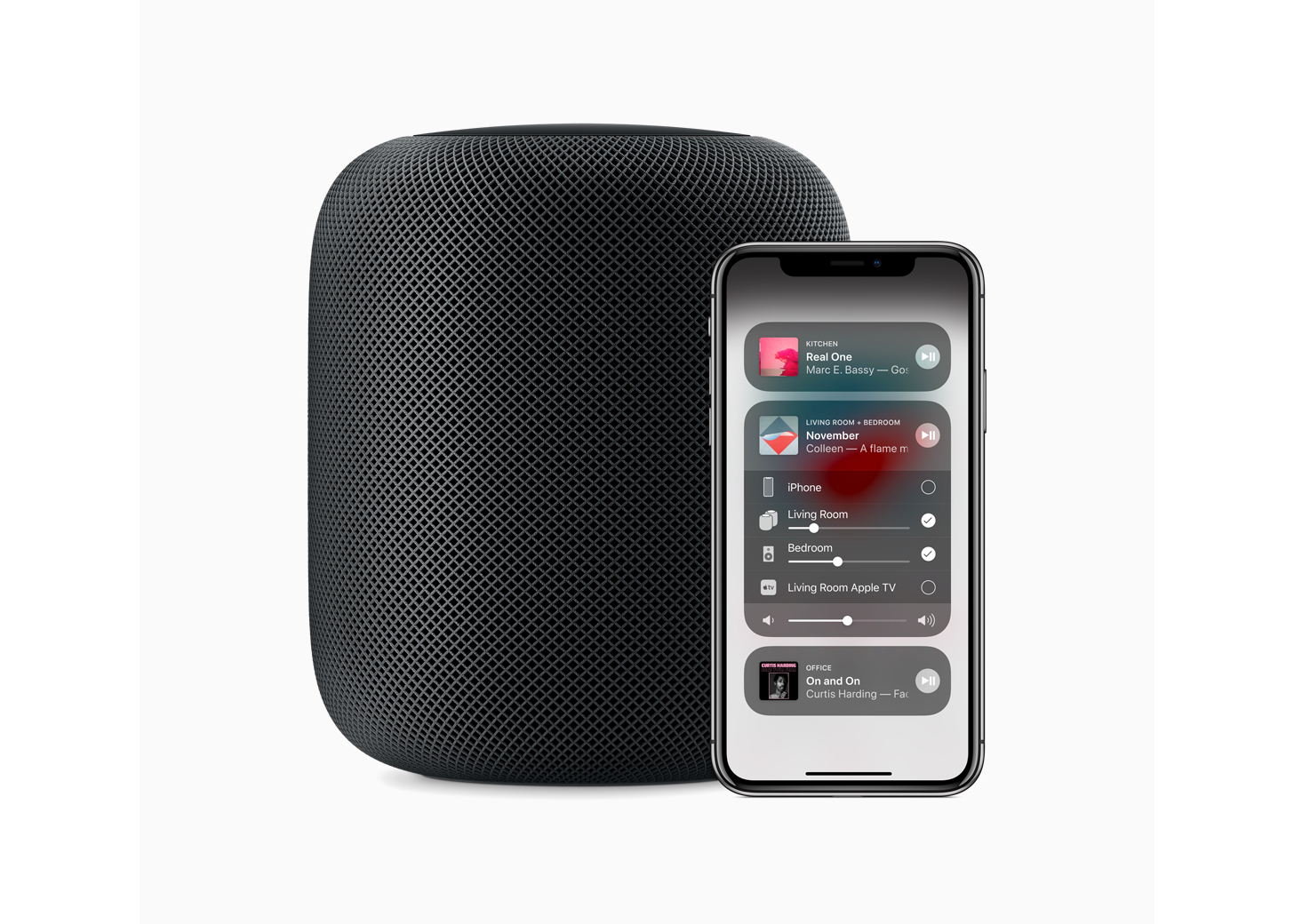
Is Apple Doing Enough in the Smart Home Market?

Jason Snell writing about a recent Apple hire for Macworld:

This past week we learned that the company has hired a new head of home products, which makes me ask the question: What exactly does Apple expect Sam Jadallah to do? Is his job to make deals with HomeKit partners and make the HomePod more successful? Or is this the sort of thing that happens when a company shifts gears because it realized that its old strategy wasn’t working?

That story got Snell thinking about how Apple could expand its current lineup of home products. He proposes two: a soundbar that integrates HomePod and Apple TV functionality and a wireless mesh networking system.

Both make a lot of sense. The technology for the soundbar has already been developed and it’s a device that sits in a unique position in a home entertainment system where it could both enhance the viewing experience with superior sound and facilitate the delivery of content from Apple’s services.

Why Apple abandoned the wireless home networking market remains a mystery. Although it may not have been as profitable as other product lines, networking sits at a strategic crossroads between all of Apple’s products. Whether it’s AirPlay, Handoff, the Universal Clipboard, other Continuity features, or something yet to come, controlling the network over which those experiences are delivered helps ensure that they work seamlessly.

Sam Jadallah, who previously worked at Microsoft and later ran a smart lock startup called Otto that was shuttered, certainly has the background to run Apple’s existing HomeKit programs, but like Snell, I hope his hiring is a sign that something bigger is on the horizon.

Permalink

Connected, Episode 231: Dozens of Invisible Footnotes

The boys dive into a sea of rumors after Federico explores San Jose’s municipal websites, Myke gives everyone a gift and Stephen returns from a journey.

On this week’s episode of Connected, we discuss the latest Marzipan rumors and consider the implications of a 6K display made by Apple. You can listen here.

Sponsored by:

  • Pingdom: Start monitoring your websites and servers today. Use offer code CONNECTED to get 30% off.
  • Luna Display: The only hardware solution that turns your iPad into a wireless display for your Mac. Use promo code CONNECTED at checkout for 10% off.
  • Care/Of: Personalized supplements delivered to your door.
Permalink

Jason Snell on Podcasting with Only an iPad Pro

Jason Snell’s podcasting setup is similar to mine – he wants to hear his own voice, record his local audio track, and have a conversation with multiple people on Skype, who also need to hear his voice coming from an external microphone. And he wants to use one computer to do it all. Now he’s figured out how to podcast from an iPad Pro with the help of an additional USB interface:

In the past, I’ve done something similar using the Audio-Technica ATR2100-USB, a microphone that can output a digital signal using USB and an analog signal via an XLR cord simultaneously. The problem is that the last time I tried to use the ATR2100-USB with my iPad Pro, it didn’t return my own voice into my ears, making me unable to judge the sound quality of my own microphone. After years of having my own voice return to me, I strongly prefer not to record unable to hear my own voice. (I use in-ear headphones that largely shut out audio from the outside world, so the experience of speaking while not hearing yourself is even more profoundly weird than it would be with leaky earbuds.)

This time I wanted it all, or at least as close to all as I’m able to get with iOS in the mix: A pristine recording of my own voice, that same high-quality microphone audio also flowing across digitally to my podcast guests via Skype, and the ability to hear both my guests and myself at the same time.

The takeaway from the story isn’t that Snell wanted to prove a point to spite Mac users – it’s that he was able to travel with one computer instead of two (he would have used most of the same audio gear with a Mac too) and that he found an expensive, but real workaround to professional podcast recording on iPad Pro.

I don’t currently have a USB audio interface like Snell’s USBPre 2, but I may have to buy one before the summer so I can record podcasts from our beach house using only the iPad Pro. (That is, assuming the iOS 13 beta I’ll have installed at that point doesn’t have meaningful improvements for audio workflows.)

Permalink

AppStories, Episode 99 – Pick 2: Everyday Workflows

On this week’s episode of AppStories, we each pick an aspect of our MacStories work and break down the apps, workflows, and processes we use to accomplish it.

Sponsored by:

  • Yoink - Simplify and improve drag and drop on your Mac, iPad and iPhone, and speed up your daily workflow.
  • Linode – High-performance SSD Linux servers for all of your infrastructure needs. Get a $20 credit.

https://staging.macstories.net/podcasts/appstories/episodes/99/embed/

Permalink

Connected, Episode 230: Here’s the Thing about Code Names

Stephen solves a problem that has been plaguing the podcast, Federico has concerns about Apple’s rumored news service and Myke is fighting a losing battle with AirPlay 2.

On this week’s episode of Connected, I reveal something from my youth and we consider the potential of future Apple services. You can listen here.

Sponsored by:

  • TextExpander, from Smile: Recall your best words. Instantly, repeatedly. Get 20% off your first year.
  • Luna Display: The only hardware solution that turns your iPad into a wireless display for your Mac. Use promo code CONNECTED at checkout for 10% off.
  • Squarespace: Make your next move. Enter offer code CONNECTED at checkout to get 10% off your first purchase.
Permalink

AppStories, Episode 98 – Mixed iOS/Mac Automation

On this week’s episode of AppStories, dive into Federico’s experiments in mixed iOS and Mac automation for controlling his Mac mini, iTunes, and podcasting setup.

Sponsored by:

  • RAW Power - Make your best shots better. If you miss Aperture, check out RAW Power for Mac and iOS. Enter to win a free copy of RAW Power for iOS or the Mac here.
  • ExpressVPN - High-Speed, Secure & Anonymous VPN Service. Get 3 months free with a 1-year package.

https://staging.macstories.net/podcasts/appstories/episodes/98/embed/

Permalink

Apple’s Health Records on iPhone Coming to Veterans

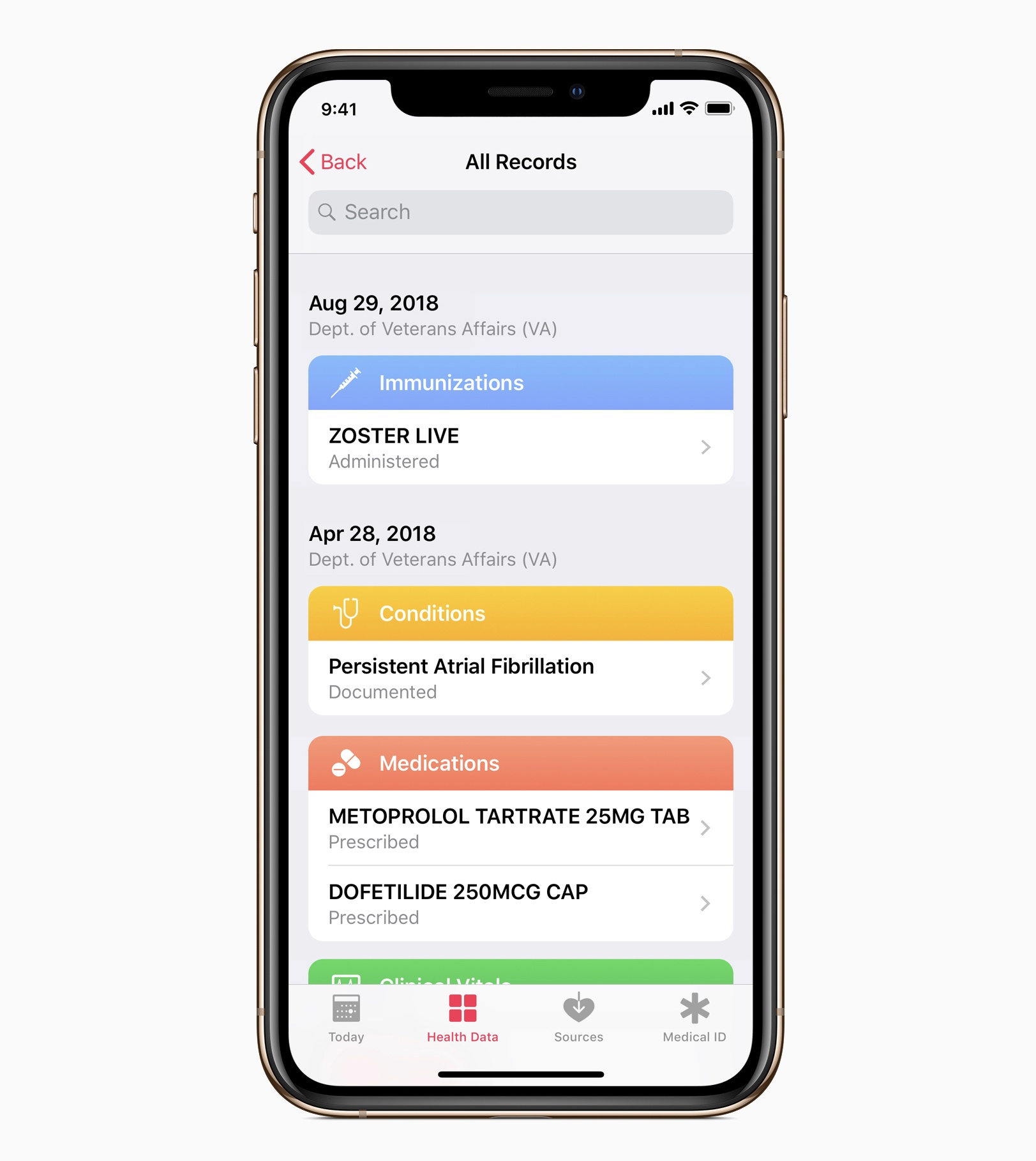
Apple today announced that its Health Records feature is coming soon to all U.S. veterans thanks to a partnership with the US Department of Veterans Affairs (VA). The announcement includes key quotes from Apple executives that highlight the growing importance of health to Apple as a company.

“When patients have better access to their health information, they have more productive conversations with their physicians,” said Jeff Williams, Apple’s COO. “By bringing Health Records on iPhone to VA patients, we hope veterans will experience improved healthcare that will enhance their lives.”

“Our goal is to empower people to better understand and improve their health, enabling them to view their medical information from multiple providers in one place easily and securely,” said Kevin Lynch, Apple’s vice president of Technology. “We’re excited to bring this feature to veterans across the US.”

First introduced as part of iOS 11.3, Health Records is an iPhone feature whereby users’ patient records from participating hospitals and clinics can be stored in the Health app for easy access. Today’s news is significant largely for the expanded scope it brings to the feature. From the press release:

Health Records on iPhone will be the first record-sharing platform of its kind available to the VA, which is the largest medical system in the United States providing service to more than 9 million veterans across 1,243 facilities.

It’s a smart partnership for Apple, and one that could make a meaningful difference in the lives of U.S. veterans.

Permalink