
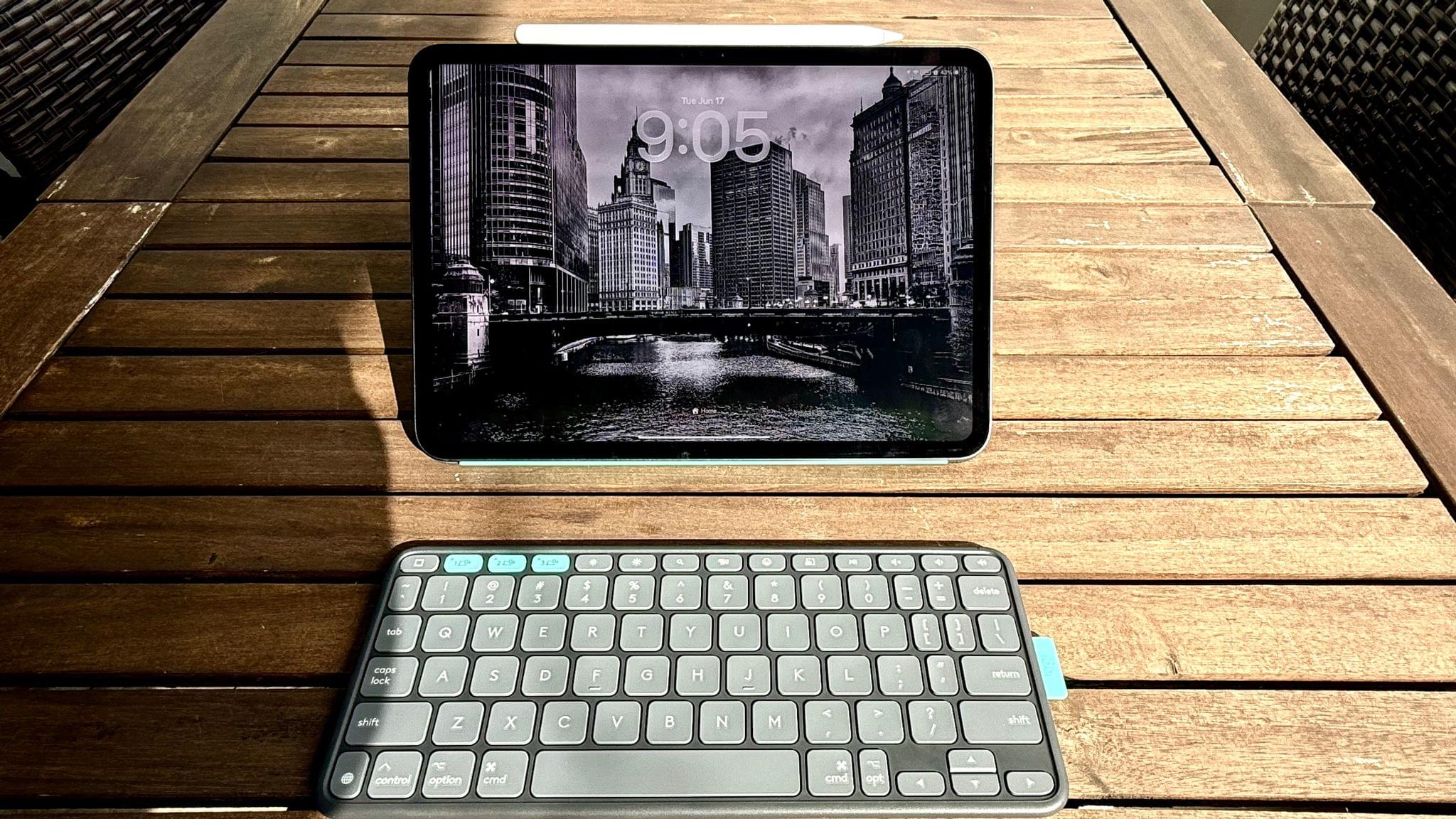
Shortly before WWDC, Logitech sent me their brand new Flip Folio case/keyboard combo to test. It’s a cleverly designed iPad case that’s a bit heavy but has a lot of other things going for it, like a very stable kickstand and an excellent travel keyboard. The Flip Folio is also more affordable than the Apple Magic Keyboard, which I expect will make it an attractive option for many iPad users.
Logitech’s Flip Folio: A Modular iPad Keyboard for Occasional Typing
Podcast Rewind: The WWDC Whirlwind and a Delivery from UPS Japan
Enjoy the latest episodes from MacStories’ family of podcasts:
AppStories






This week, Federico and John catch listeners up on their whirlwind WWDC week, which was chaotic in the best possible way.
On AppStories+, Federico and John get excited about what the WWDC announcements say about the direction of automation on Apple’s platforms.
This episode is sponsored by:
- Notion – Try the powerful, easy-to-use Notion AI today.
NPC: Next Portable Console
This week on NPC, Brendon shares his first impressions of the Nintendo Switch 2 after UPS Japan comes knocking, and all three hosts cover a chaotic week of handheld news – from the RG Slide to a surprise ASUS/Xbox handheld.
This week on NPC XL, Federico and John share their experiences traveling with the Nintendo Switch 2, and John explains how Apple’s upcoming Games app is more than just Game Center.

Hands-On: How Apple’s New Speech APIs Outpace Whisper for Lightning-Fast Transcription
Late last Tuesday night, after watching F1: The Movie at the Steve Jobs Theater, I was driving back from dropping Federico off at his hotel when I got a text:
Can you pick me up?
It was from my son Finn, who had spent the evening nearby and was stalking me in Find My. Of course, I swung by and picked him up, and we headed back to our hotel in Cupertino.
On the way, Finn filled me in on a new class in Apple’s Speech framework called SpeechAnalyzer and its SpeechTranscriber module. Both the class and module are part of Apple’s OS betas that were released to developers last week at WWDC. My ears perked up immediately when he told me that he’d tested SpeechAnalyzer and SpeechTranscriber and was impressed with how fast and accurate they were.
It’s still early days for these technologies, but I’m here to tell you that their speed alone is a game changer for anyone who uses voice transcription to create text from lectures, podcasts, YouTube videos, and more. That’s something I do multiple times every week for AppStories, NPC, and Unwind, generating transcripts that I upload to YouTube because the site’s built-in transcription isn’t very good.
What’s frustrated me with other tools is how slow they are. Most are built on Whisper, OpenAI’s open source speech-to-text model, which was released in 2022. It’s cheap at under a penny per one million tokens, but isn’t fast, which is frustrating when you’re in the final steps of a YouTube workflow.
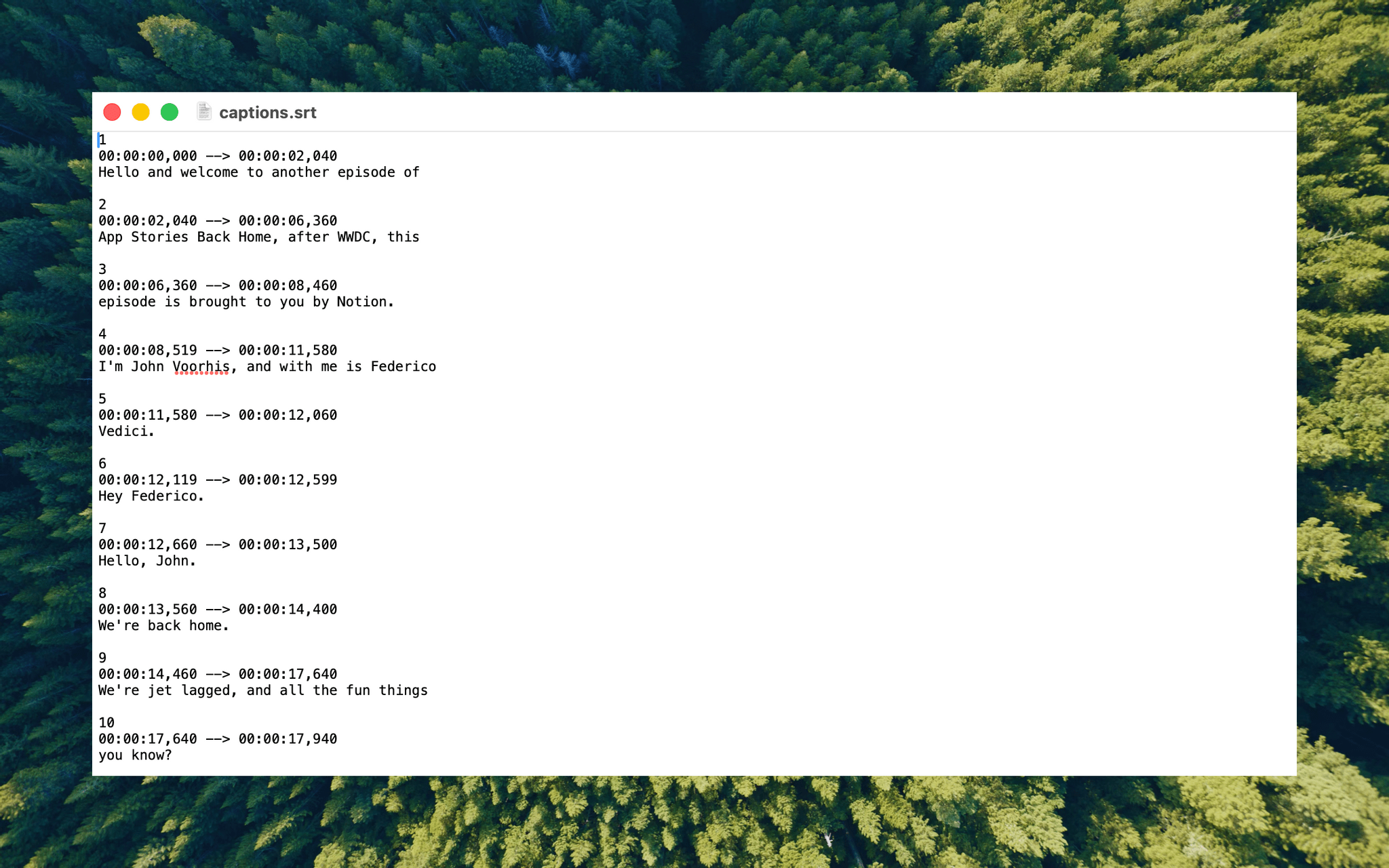
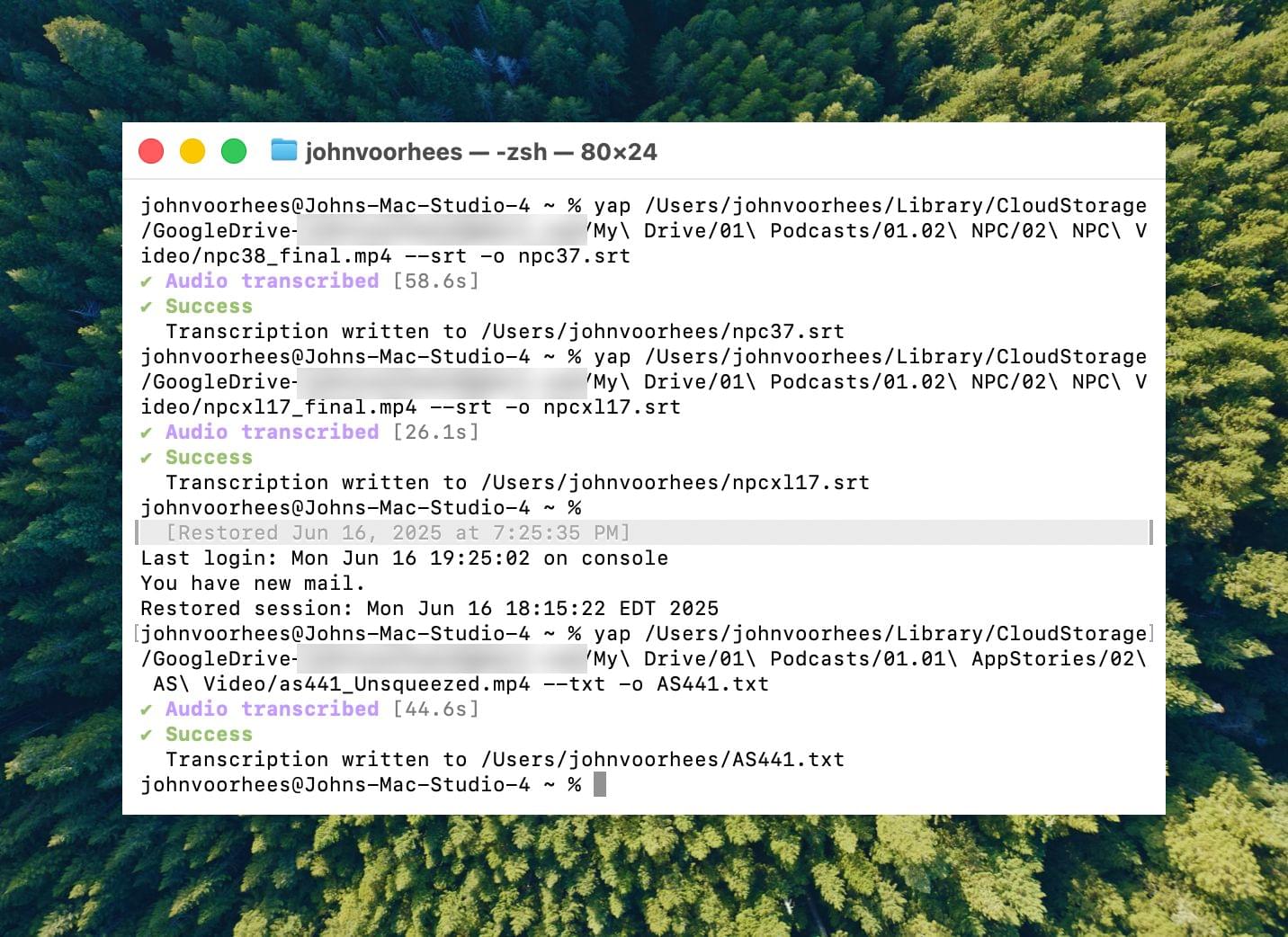
I asked Finn what it would take to build a command line tool to transcribe video and audio files with SpeechAnalyzer and SpeechTranscriber. He figured it would only take about 10 minutes, and he wasn’t far off. In the end, it took me longer to get around to installing macOS Tahoe after WWDC than it took Finn to build Yap, a simple command line utility that takes audio and video files as input and outputs SRT- and TXT-formatted transcripts.
Yesterday, I finally took the Tahoe plunge and immediately installed Yap. I grabbed the 7GB 4K video version of AppStories episode 441, which is about 34 minutes long, and ran it through Yap. It took just 45 seconds to generate an SRT file. Here’s Yap ripping through nearly 20% of an episode of NPC in 10 seconds:
Replay
Next, I ran the same file through VidCap and MacWhisper, using its V2 Large and V3 Turbo models. Here’s how each app and model did:
| App | Transcripiton Time |
|---|---|
| Yap | 0:45 |
| MacWhisper (Large V3 Turbo) | 1:41 |
| VidCap | 1:55 |
| MacWhisper (Large V2) | 3:55 |
All three transcription workflows had similar trouble with last names and words like “AppStories,” which LLMs tend to separate into two words instead of camel casing. That’s easily fixed by running a set of find and replace rules, although I’d love to feed those corrections back into the model itself for future transcriptions.
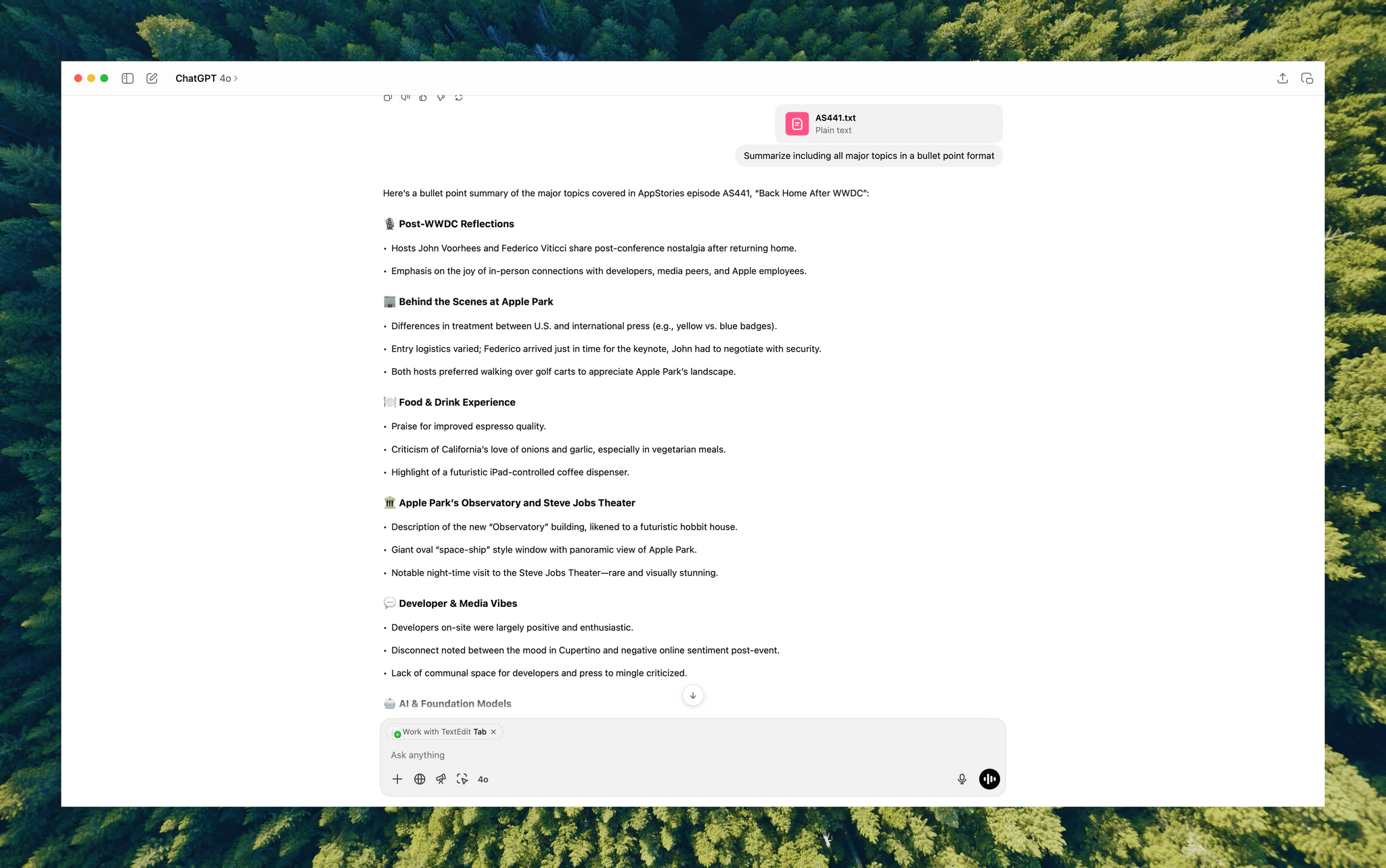
What stood out above all else was Yap’s speed. By harnessing SpeechAnalyzer and SpeechTranscriber on-device, the command line tool tore through the 7GB video file a full 2.2× faster than MacWhisper’s Large V3 Turbo model, with no noticeable difference in transcription quality.
At first blush, the difference between 0:45 and 1:41 may seem insignificant, and it arguably is, but those are the results for just one 34-minute video. Extrapolate that to running Yap against the hours of Apple Developer videos released on YouTube with the help of yt-dlp, and suddenly, you’re talking about a significant amount of time. Like all automation, picking up a 2.2× speed gain one video or audio clip at a time, multiple times each week, adds up quickly.
Whether you’re producing video for YouTube and need subtitles, generating transcripts to summarize lectures at school, or doing something else, SpeechAnalyzer and SpeechTranscriber – available across the iPhone, iPad, Mac, and Vision Pro – mark a significant leap forward in transcription speed without compromising on quality. I fully expect this combination to replace Whisper as the default transcription model for transcription apps on Apple platforms.
To test Apple’s new model, install the macOS Tahoe beta, which currently requires an Apple developer account, and then install Yap from its GitHub page.
Direct Mail 7: Professional Email Marketing Built Just for Mac Users [Sponsor]
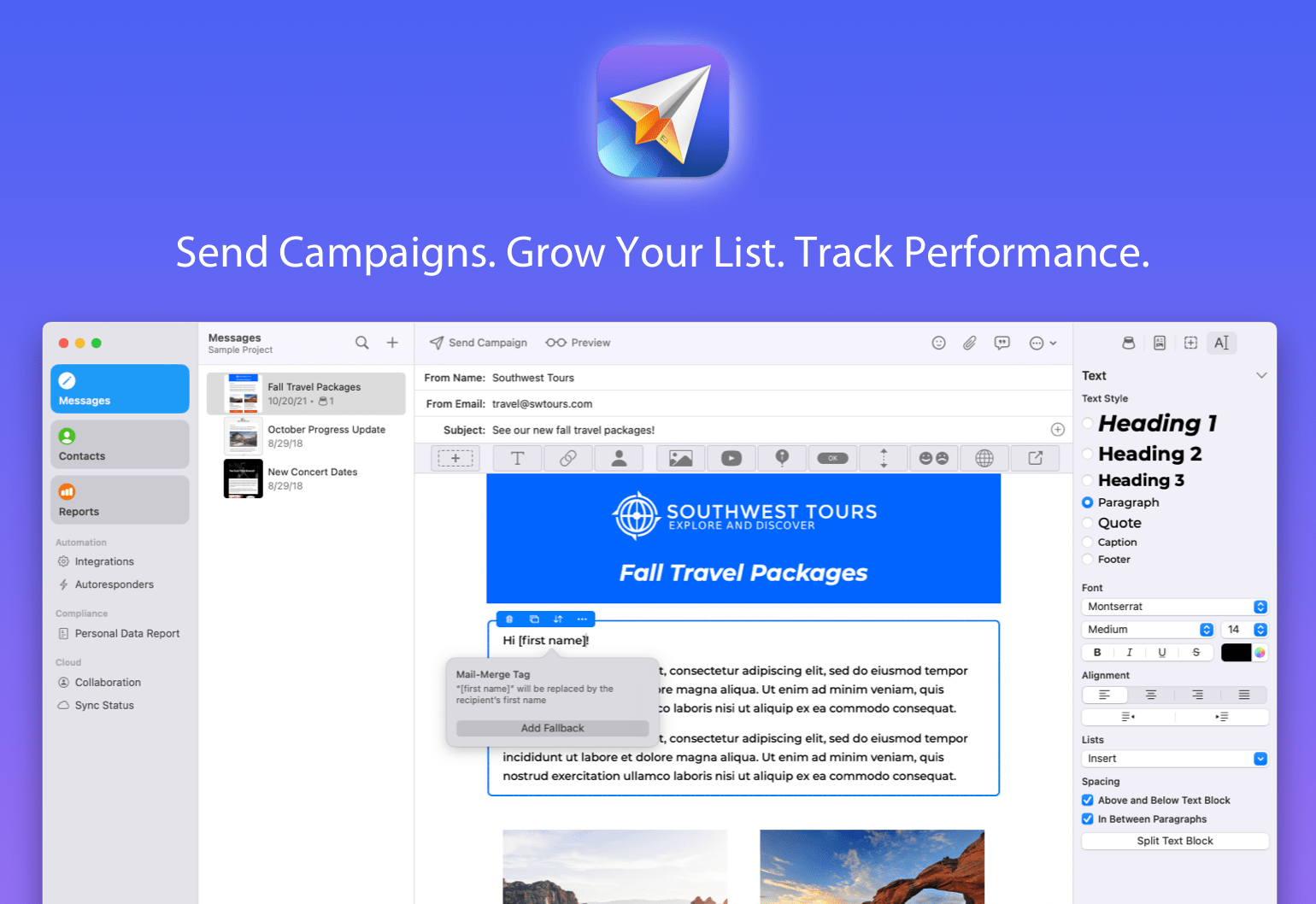
If you run a business, a side hustle, a podcast, or just want to stay in touch with a community, you know how important great email marketing can be. That’s where Direct Mail comes in — a native macOS app that makes it incredibly easy to design, send, and track email campaigns that get results. Unlike web-based alternatives, Direct Mail is designed specifically for macOS, with the speed, polish, and Mac-first integration you expect.
The brand-new Version 7 is a huge leap forward. This update brings a host of new features, including a reimagined user interface, smarter list management, powerful email signup forms, upgraded reporting, and all-new tools to help your emails stand out. Whether you’re sending to 10 people or 10,000, Direct Mail gives you the tools to do it professionally and painlessly.
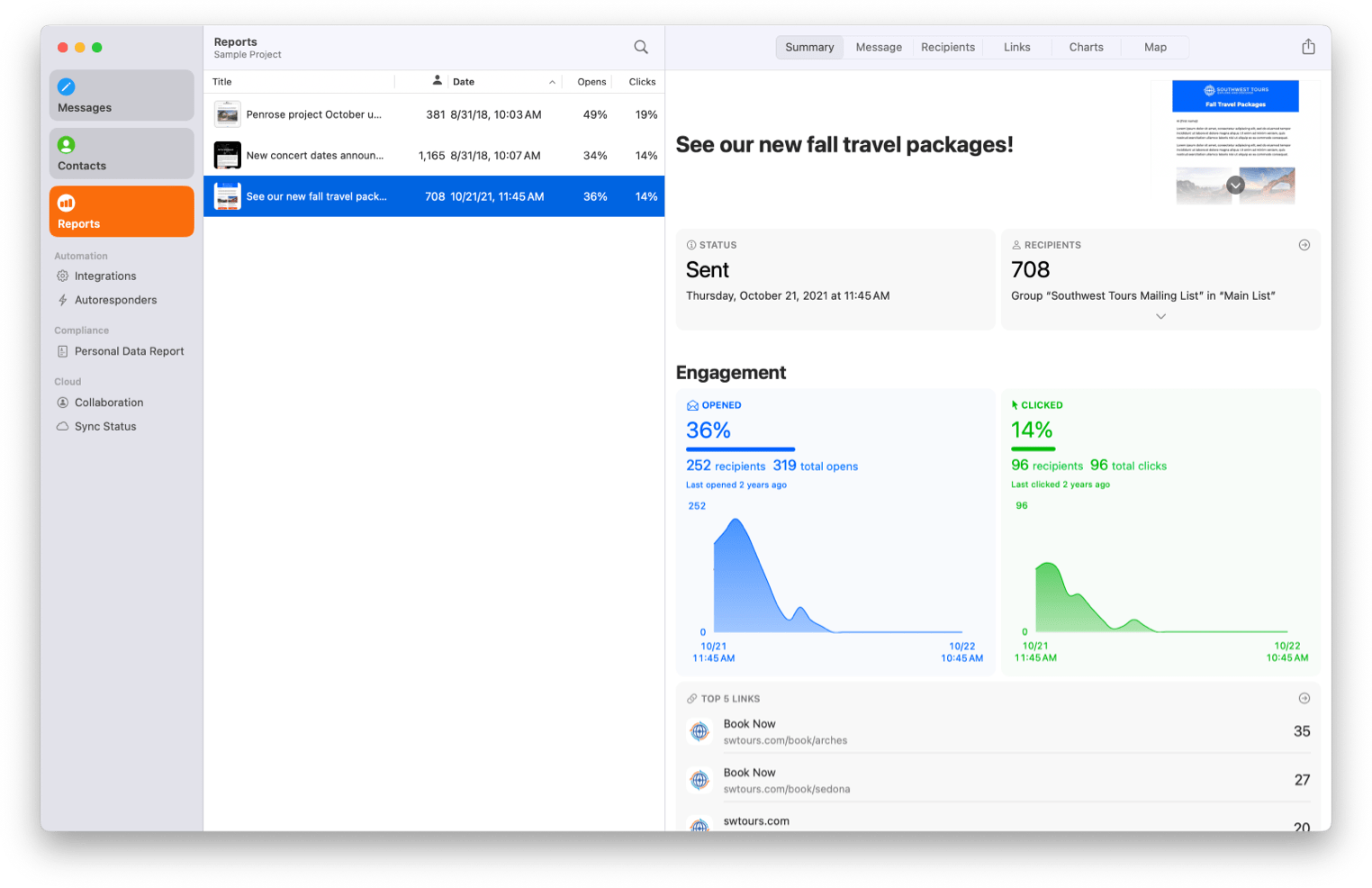
If you’ve ever been frustrated with clunky, web-based email marketing tools, or just want something that feels right at home on your Mac, check out Direct Mail. It’s free to download and try, with flexible pricing plans to match every budget — including pay-as-you-go options. You can be up and running with your first campaign in just minutes. Our friendly customer support reps are available via live chat to help with any questions, ensuring you’re never stuck. Get started today and expand your reach with powerful, Mac-first email marketing tools.
Our thanks to Direct Mail for sponsoring MacStories this week.
 MacStories Weekly: Issue 470
Podcast Rewind: WWDC Announcement Details and Apple Original Film Echo Valley
Enjoy the latest episodes from MacStories’ family of podcasts:
AppStories
For our second WWDC episode of AppStories, Federico and John dig into the details they’ve learned about what was announced by Apple this week at WWDC 2025.
This episode is sponsored by:
- Clic for Sonos – No lag. No hassle. Just Clic.
- Elements – A truly modern, drag-and-drop website builder for macOS.
Magic Rays of Light
Sigmund and Devon break down Apple’s tvOS and visionOS announcements from WWDC25, grade their predictions, and highlight Apple Original film Echo Valley.
Stephen Hackett on Opening Up a ‘Macintosh’ Screensaver Treasure Trove→
As detailed on 512 Pixels, Stephen Hackett managed to break into the beautiful ‘Macintosh’ screensaver and uncover the details of how it was constructed.
When looking for macOS Tahoe’s wallpapers, I was reminded of this project. I went digging through the SSD on my MacBook Pro, and my journey through Finder has yielded great fruit.
The screen saver is actually an Extension, residing at /System / Library / ExtensionKit / Extensions / WallpaperMacintoshExtension.appex (spaces added for legibility).
Right-clicking to “Show Package Contents” unveils a treasure trove:
The screensaver itself is not a video one, as evident by the way it randomly displays its designs when activated. Until now, it was somewhat of a mystery how this was dynamically created, so it’s great to peek behind the curtain.
I won’t spoil the details as they are pretty fun, and not really what you would have expected. Stephen has also collected all the image files in HiRes, should you wish to download them.
As someone who absolutely adores these designs to this day (so much so that I have not one but two of them as tattoos - the pixelated cursor and the smiling Mac), this was a delightful little discovery.
Albums: Algorithm-Free Listening for Music Lovers [Sponsor]
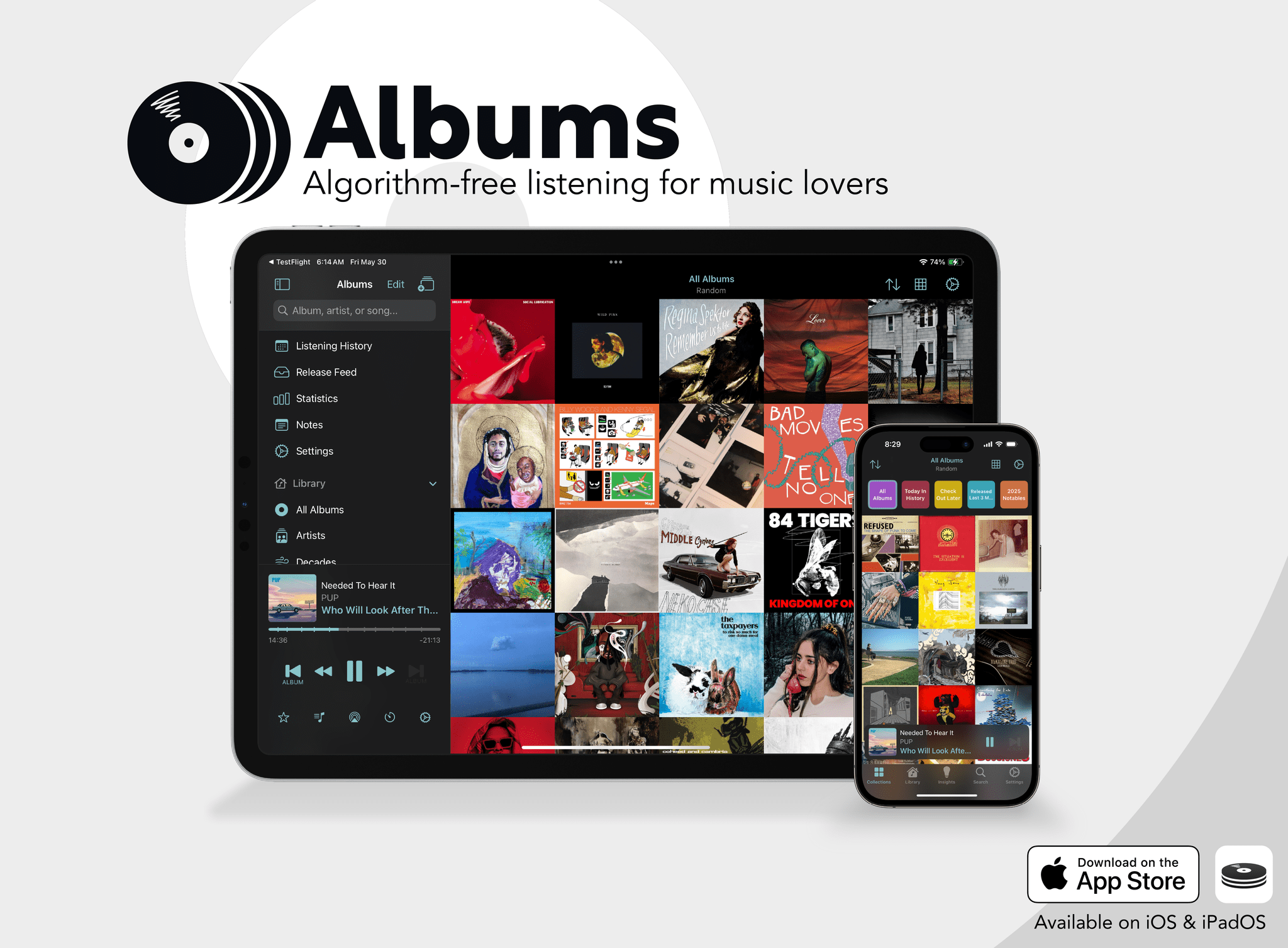
Albums is the player that cares as much about your music library as you do. Made by music-obsessed solo developer Adam Linder, Albums provides the best alternative to the built-in Music app for true music lovers.
MacStories readers can redeem an extra-long two-week free trial of Albums Premium.
Albums is the infinite, high-tech CD binder or vinyl crate you wish you’d had in high school. Relive the glory days of the iPod with album shuffle, and use robust tagging and filtering options to build the album collections of your dreams—you can even tag music not in your library to check out later.
Beyond playback and organization, Albums is packed with features to enrich your musical life; the Release Feed keeps track of new and upcoming music from artists and record labels in your library; the app tracks your play history and generates regular listening reports; and the Insights tab offers dozens of personalized collections to help you experience your library in a new way.
Albums is deeply integrated with iOS system features, including comprehensive Shortcuts support, a first-class CarPlay app, and interactive widgets. It is available for iOS and iPadOS, with a macOS app on the horizon. Coming up on six years of iterative improvement on the App Store, the app is the best it’s ever been—and only getting better.
When you’re ready to level up your music-listening experience, redeem your two-week trial of Albums Premium. If you’re looking for something a little different, you can also check out Adam’s chaotic neutral music-discovery app, Univershuffle, which shuffles all of the music on the Apple Music catalog. Seriously!
Our thanks to Albums for supporting MacStories’ WWDC coverage this week.
Podcast Rewind: Chatting with Apple Design Award Winners, Favorite WWDC Announcements, and Transatlantic Tea Talk
Enjoy the latest episodes from MacStories’ family of podcasts:
AppStories
For their first WWDC 2025 AppStories episode, Federico and John interview finalists and winners of the Apple Design Award.
This episode is sponsored by:
- Gentler Streak – Personalized fitness guidance that puts your well-being first. Get a 2-week Premium free trial.
- OpenCase – A better iPhone case for MagSafe accessories. Get 10% off with code APPSTORIES.
Comfort Zone
Comfort Zone does WWDC! Federico Viticci joins the show to talk about our favorite things revealed at Apple’s developer conference.
Ruminate
Snack news dropped just before recording, Robb’s been buying more notebooks, and John and Robb discuss videogame news.