


Here are today’s @MacStoriesDeals on iOS, Mac, and Mac App Store apps that are on sale for a limited time, so get them before they end!
Posts tagged with "mac"
#MacStoriesDeals - Monday
DwellClick Changes The Way You Click & Drag
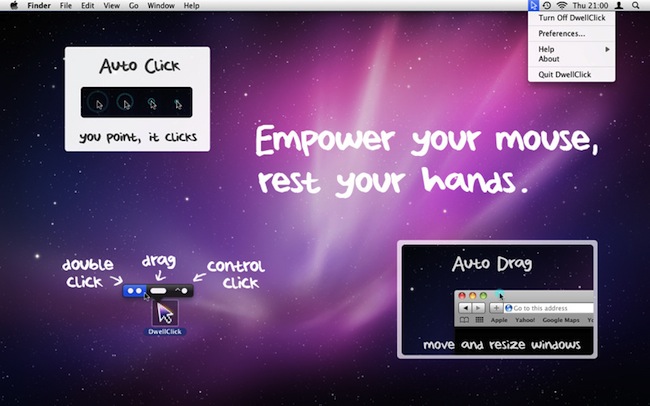
Whether your main desktop setup consists of an iMac rocking a Magic Trackpad or Magic Mouse or you’re more of a MacBook user relying on the built-in glass trackpad, input methods on OS X machines don’t change. In fact, moving the cursor on screen and clicking and selecting and dragging stuff around hasn’t changed for decades. In the same way Steve Jobs saw the first mouse device almost thirty years ago and was impressed by the concept of interacting with items on screen, today’s pointing devices retain the original concept of a user’s hand and fingers touching an external or embedded surface / buttons to perform actions like scrolling, selection, clicks and drags. Of course iOS devices have changed this: with multi-touch gestures and displays, the user no longer moves something on screen, he touches the screen. Many say Lion is going the way of iOS with the addition of gestures and iOS-like commands, but as long as computers have non-touch displays the fundamental concept of indirect clicking and controls will live. DwellClick, a new app available on the Mac App Store, provides a way to change the default behavior of clicking and dragging on OS X by enhancing the experience with less clicks and button pressing.
DwellClick basically enables clickless operations on a computer. Instead of clicking you move and point, and DwellClick will take care of the actual clicking for you. Same applies for dragging windows and files or scrolling a page: as DwellClick is smart enough to recognize whether you’re hovering over an app window, a folder or a scrollbar, the utility will understand what you want to do and contextually change its functionality to let you move a window, scroll without releasing you hand from the trackpad, and so forth. DwellClick wants you to save hundreds of clicks every day, but it’s clearly not an app for everyone. Those who are used to clicks and scrolling after years of computing won’t probably appreciate the new ideas brought along by DwellClick. In fact, I had a hard time trying not to click everything on screen in my first tests when I was just moving the cursor with DwellClick enabled – as you move and stop the cursor, DwellClick clicks. You can set a click delay time in the settings, as well as disable automatic clicking and dragging, or customize the color of the blinking light that tells you DwellClick has clicked something on screen or started dragging an element around.
DwellClick also plays well with modifier keys and control-clicking: when the app’s turned on, you can hit keys like Cmd, Option or Control to tell DwellClick they should go with the next click. Or, you can simply double-press one of those keys to “lock it” with a visual cue displayed on screen. Similarly, hitting the Fn key when DwellClick’s running will activate an iOS-like popup menu to double-lick, drag and control-click. It sounds complicated but it’s actually very intuitive once you’ve found your perfect delay time. You can read more to get the hang of it in DwellClick’s online User Guide.
At $11.99 in the App Store, DwellClick doesn’t come cheap but it’s undoubtedly an app that dramatically changes the way you control your computer. For users who don’t mind change and innovation, this utility will probably make using a Mac even easier; for people like me, change will be difficult especially when you’re really used to the standard way of clicking and selecting files. But you should give it a try if you’re looking for something new.
Switch Between iTunes Accounts From The Menubar
As usual after someone comes out with a hack that involves AppleScript and a bit of manual fiddling, a GUI version follows after a few weeks. Back in late April we covered an AppleScript created by a Reddit user that, once configured, allowed you to quickly switch between multiple iTunes accounts by simply invoking a shortcut or manually launching the script. Many of us have been there before: in order to enjoy music and apps from the iTunes Store internationally – sometimes avoiding restrictions and taking advantage of timezones – we have to set up different (possibly fake) international accounts. Whilst Apple doesn’t exactly accept this practice, it’s still possible as long as you don’t select a payment method in iTunes. Or maybe, some people simply prefer to create legit accounts and keep different purchases tied to each account. No matter the reason, however, switching between accounts in iTunes is a slow and annoying process: the app isn’t meant for multi-account usage, and every single time you’re forced to re-enter your account’s email and password.
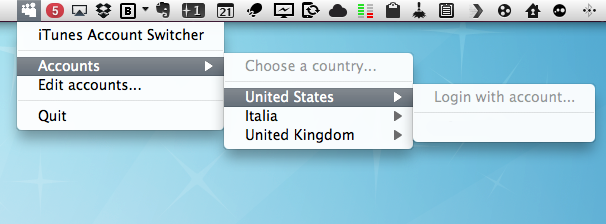
The AppleScript we covered provided a great way to switch accounts and have iTunes automatically fill in the required fields; today’s solution, brought to us by Nature’s Eye Studios, gives the same concept an interface with a lightweight app that lives in the menubar and lists all your iTunes accounts, properly organized by country. You can create as many accounts as you want from the settings, and the app will lets you switch between them by simply selecting one from the menubar’s dropdown menu.
I’ve found this app to be slightly more stable than the aforementioned AppleScript (which made my iTunes crash every once in a while) and, overall, more intuitive than launching a script created for each account I have. You can download iTunes Account Switcher here.
#MacStoriesDeals - Friday Night!

Here are today’s @MacStoriesDeals on iOS, Mac, and Mac App Store apps that are on sale for a limited time, so get them before they end!
Weather HD for Mac Brings Beautiful Forecasts to the Desktop

Weather HD is a popular weather application for iPhone and iPad by development studio vimov which, unlike most weather tools that display current conditions and weekly forecasts through icons and data sets on screen, comes with a selection of beautifully animated videos that depict the weather conditions of your location. Weather HD animates a cloudy and dark sky when a thunderstorm is coming, and lets you view a green field with grass moving in front of you in case of a windy but sunny summer day. If you’ve tried the iPad app last year, you know what to expect – a very few numbers, lots of video and animations.
The Mac version of Weather HD, released today, takes where the iOS counterparts left off to offer even more videos, and bigger ones with new scenarios and conditions. The app is a 225 MB download for a reason: it’s full of video content that will be displayed on your Mac’s screen as soon as you enter your ZIP code or city name. In the Mac app, though, there’s more than the iPad version. You can set up notifications to be alerted when temperature drops below a certain amount of degrees, and quickly check out the hourly forecasts from an icon in the menubar. You can enter multiple locations, as well as choose to run the app in windowed or fullscreen mode. In the main screen, animated forecasts run on the right panel, and a series of tabs in the upper left hand corner get you access to a slew of other functionalities. You can check out severe conditions and moon phases in-app, or switch to the Map view and apply different layers on your location like clouds, temperature, humidity and wind. When you’re done, the additional panel slides back to reveal video forecasts in their full glory again.
Weather HD has never been an app for weather professionals and geeks, but the Mac app packs more features than its iOS siblings. Videos look good, and whether or not the whole concept can become annoying after a few days of usage it’s totally up to you. But at $3.99, I think vimov is off to another success in the App Store. Read more
Picturescue Recovers Photos from iOS Backups
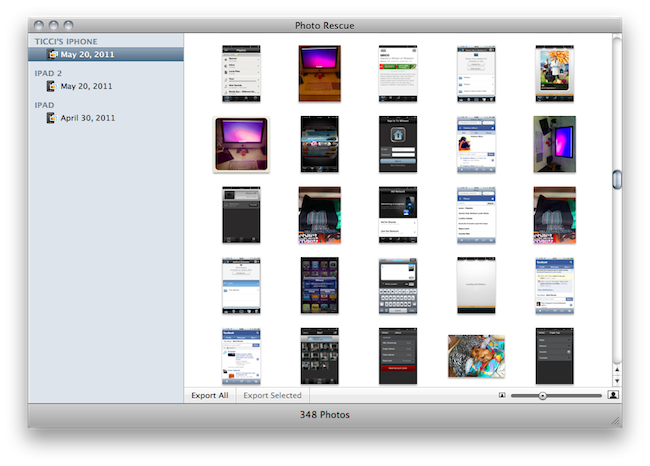
When an iPhone or iPad gets stolen or lost, we immediately worry about our personal data stored on the device (like email, contacts, passwords and history) being accessed by someone else with no good intentions. Whilst Apple’s free Find my iPhone service allows us to easily block and wipe a device that’s no longer with us, the loss of personal media like photos and videos is something we can’t fix remotely, at least not yet. Picturescue, a new Mac app by developers Pádraig Kennedy and John Ryan, provides a dead-simple solution to recover photos from an iOS device: rather than plugging directly into an iPhone or iPad, Picturescue reads the backup stored locally on your computer to retrieve photos and export them in their original format to a new location. This means that, provided you’ve synced your device with iTunes and you’ve decided to save an unencrypted backup (Picturescue can’t read encrypted iTunes backups for now), you’ll be able to view photos and export them at any time. It’s as easy as firing up the software, selecting the device in the sidebar, and choosing the photos to export.
Picturescue can be downloaded for free if you only want to view photos found in the backup file, and a $4.99 purchase gives you the possibility to export. The lack of support for encrypted backups is a major downside, but considering iTunes defaults to unencrypted backups on Mac and Windows machines, this shouldn’t be a problem for all those people that don’t care about password-protecting their iOS device backups. Get the app here.
Second Build of Mac OS X 10.6.8 Seeded to Developers
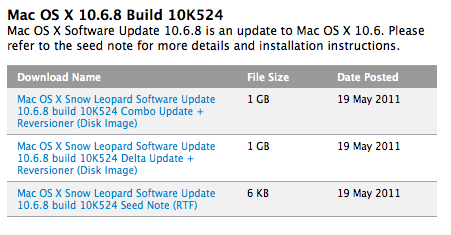
Last night, Apple seeded the second build of Mac OS X 10.6.8 to developers. The new build, weighing at around 1 GB, carries number 10K524 and it’s available now for download in the Mac Dev Center. According to people familiar with the new release, focus areas mentioned in the seed notes are still AirPort, Graphics Drivers, Mac App Store, Networking, QuickTime and VPN.
The first build of 10.6.8 was seeded last week on May 13, coming as a surprise for those who thought Mac OS X 10.6.7 would be the last Snow Leopard update. Apple is expected to unveil the final version of 10.7 Lion at the WWDC in June with a public release this summer, leading many to believe 10.6.8 will be the last maintenance update for machines running Snow Leopard.
#MacStoriesDeals - Thursday Night!

Here are today’s @MacStoriesDeals on iOS, Mac, and Mac App Store apps that are on sale for a limited time, so get them before they end!
Ars Investigates Recent Mac Malware→
Ars Investigates Recent Mac Malware
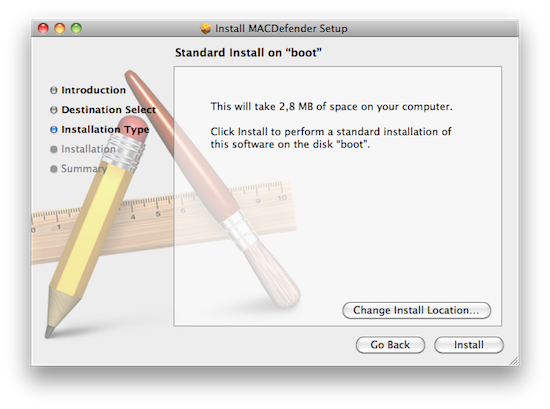
MAC Defender has changed everything,” one Apple Store Genius, who requested to remain anonymous (we’ll call him Lenny) told Ars. “We probably get 3 or 4 people with this per day. Most of them only got as far as installing the program and haven’t entered their credit card details.”
Lenny went on. “This always sparks a debate at the bar on whether antivirus software is necessary on the Mac. This is difficult, as the store sells several antivirus products implying that Apple supports the idea, but as many customers point out, the sales guys aren’t shy in making the claims for Mac OS X’s security. Internally, Apple’s [IT] department mandates the use of Norton Antivirus on company machines.
Following the controversy that sparkled after the large diffusion of MAC Defender (covered here) that rose (again) the inevitable question as to whether being scared of malware on a Mac is nothing but crying wolf, Ars Technica takes a step back and tries to analyze the situation interviewing Apple employees, Geniuses, and various representatives of antivirus / security companies. Whilst it’s kind of obvious that antivirus makers will always recommend their products because you have to keep your machine secure, the takeaway from support specialists is interesting: there’s no need to panic, but people are undoubtedly coming over asking for help with this recent malware.
Of course, the peculiar nature of Mac Defender (it’s a “scanning software” that asks for your credit card details, and it’s downloaded through a malicious script from certain websites and Google Image Search) raises another issue: users are installing the software by manually going through an installer and giving it their passwords – this shouldn’t happen. Anyone who’s a little skilled in computing should know that stuff you didn’t want to download shouldn’t be granted permission to run in the first place. And MAC Defender comes as a whole installer. On the other hand, I don’t think it’s really about crying wolf (though some people like to run overly sensationalistic headlines), as much as it’s about the fact that this malware ultimately exists. Fact.
Ars has an interesting read, and our friends at TUAW have a pretty handy guide detailing the removal of MAC Defender. The best tip, however, is still the same: don’t execute programs and documents you don’t know.