John Voorhees

5429 posts on MacStories since November 2015

John is MacStories' Managing Editor, has been writing about Apple and apps since joining the team in 2015, and today, runs the site alongside Federico. John also co-hosts four MacStories podcasts: AppStories, which covers the world of apps, MacStories Unwind, which explores the fun differences between American and Italian culture and recommends media to listeners, Ruminate, a show about the weird web and unusual snacks, and NPC: Next Portable Console, a show about the games we take with us.

Developers Show What They Could Make if Apple Opened Up Watch Face Development

Last week we linked to Marco Arment’s article critiquing Apple’s watch faces and calling for Apple to open up watch face design and development to third parties. By the next day, Steve Troughton-Smith had an Xcode project up and running that uses SpriteKit to simulate custom watch faces. Troughton-Smith posted pictures of the watch faces he created on Twitter, which drew a lot of interest from other developers.

Troughton-Smith uploaded his watch face project to GitHub, and in the days that followed, developers, including David Smith, who’s been making Apple Watch apps for his health and fitness apps since the Series 0 was introduced, began playing with Troughton-Smith’s code. Writing about the experience on his website Smith said:

There is something delightful about solving a problem that is superficially so simple and constrained. The constraint leads to lots of opportunities for creative thinking. Ultimately you just need to communicate the time but how you do that can take countless different forms. It reminds me of the various ‘UI Playgrounds’ that have existed in app design. For a while it was twitter clients, then podcast players and weather apps.

I spent the weekend following along as Troughton-Smith, Smith, and others designed all manner of personalized watch faces. The experience reminds me of the flurry of activity and excitement during the first months after the iPhone was released when developers reverse-engineered Apple’s APIs to create the first jailbroken apps even before there was an App Store. Let’s hope that history repeats itself and Apple opens up watch face development to third parties like it did with apps.

Below and after the break, we’ve collected tweets following Troughton-Smith’s work and showing off some of the designs that have been created over the past several days.

https://twitter.com/stroughtonsmith/status/1049733933175369729
https://twitter.com/stroughtonsmith/status/1049739746967203840
https://twitter.com/stroughtonsmith/status/1050010561151475712
https://twitter.com/stroughtonsmith/status/1050022867738484736
Read more


Frequently-Used Shortcuts, Part 1

AppStories+ Deeper into the world of apps

AppStories Episode 83 - Frequently-Used Shortcuts, Part 1

0:00
35:05

AppStories+ Deeper into the world of apps

This week, Federico and John discuss some of their most frequently-used shortcuts for work and their personal lives.

Read more


RECaf Review: Effortless Caffeine Tracking

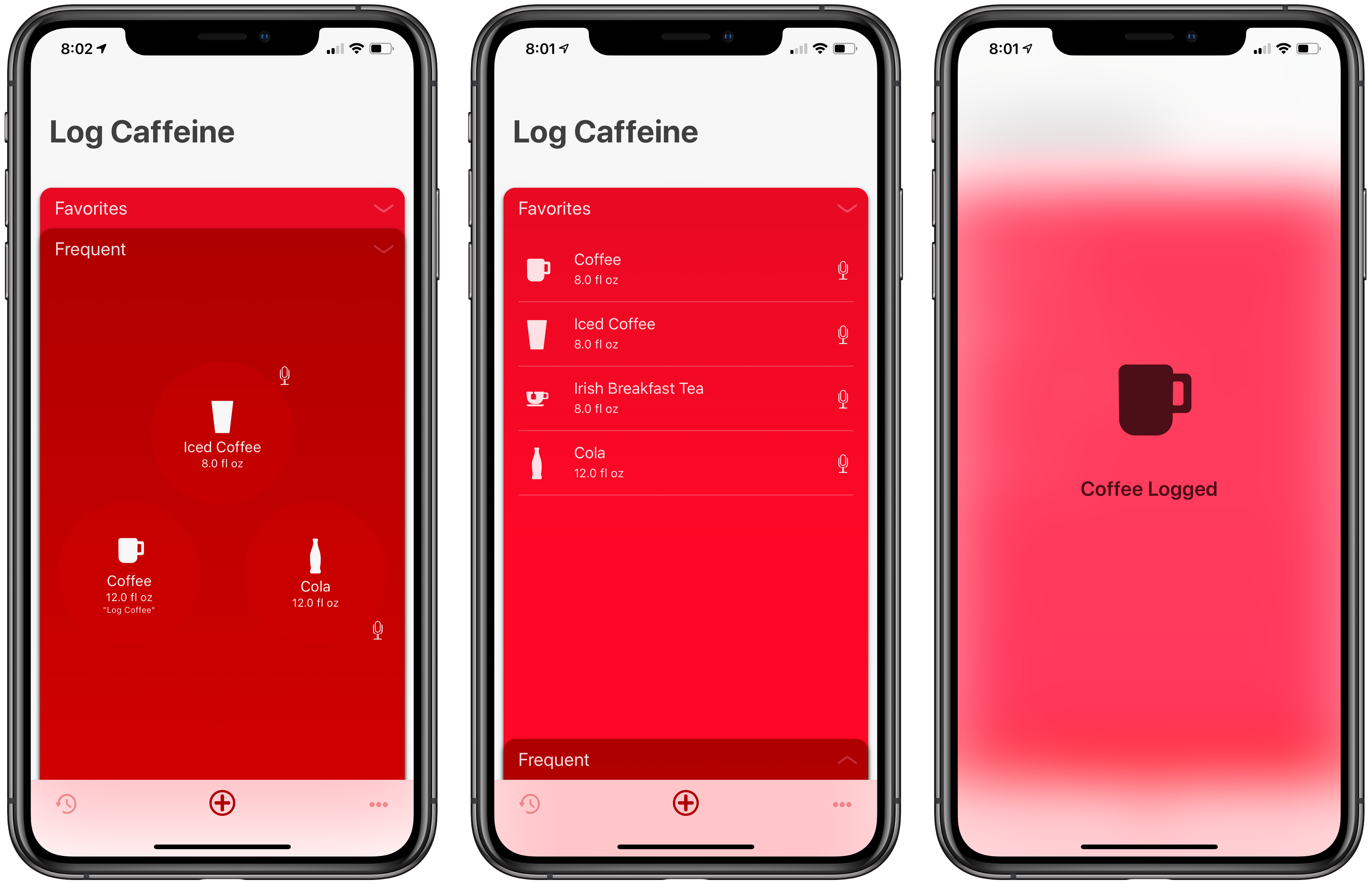
RECaf is a brand-new caffeine-tracking app by Joe Cieplinski. The app does a remarkable job wringing the friction out of tracking caffeine, making it an excellent example of the benefits of using a narrowly-focused utility to get the best possible user experience.

Tracking anything is hard. It’s easy to forget to do and an interruption of the thing you’re trying to track. As a result, entering data is often sporadic or abandoned entirely. Cieplinski gets this and has built an app that is unusually sticky.

Read more


Apple Watch Face Legibility

In a post on Marco.org, Overcast developer Marco Arment critiques the design of many of the current Apple Watch faces. Using a variety of analog watches as references, Arment highlights the design elements that make them legible, few of which are followed by Apple’s faces:

Across a wide variety of brands, styles, and price points, a few key design principles are clear:

  • The hour markers for 12 (and often 3/6/9) are more prominent.
  • The hour indices are much larger than the minute markings.
  • The hour hands nearly touch the hour indices.

These all improve legibility by making it as fast and easy as possible to know which hour is being indicated (and minimize the chance of an off-by-one error), first by orienting your eyes to the current rotation with the 12 marker, then by minimizing the distance between the hour hand and the indices it’s between.

Arment is especially critical of the Infograph face, which is so hard to read that many people have resorted to using a digital time complication with it. He concludes that it’s time for Apple to allow third parties to create watch faces.

We covered our Apple Watch faces on AppStories this week, and both Federico and I noted that we use a digital time complication with the Infograph watch face because the hands are so hard to read. As Arment’s piece points out, that isn’t uncommon, but it shouldn’t be necessary and is a pretty clear indication that the design is flawed. I’ve been happy with the Series 4 Watch’s support for more complications, but I also want more face options and flexibility across watch faces. It’s time for Apple to re-evaluate its current watch faces and reconsider letting developers create faces of their own.

Permalink

AppStories, Episode 82 – Our Apple Watch Faces, Complications, and Docks

On this week’s episode of AppStories, we talk about how we’ve set up our new Series 4 Apple Watches including the complications we use, new apps we are trying, and what’s in our Watch docks.

Sponsored by:

  • Linode - High performance SSD Linux servers for all of your infrastructure needs. Get a $20 credit with promo code ‘appstories2018’
  • Freshbooks: Online invoicing made easy.

https://staging.macstories.net/podcasts/appstories/episodes/82/embed/

Permalink